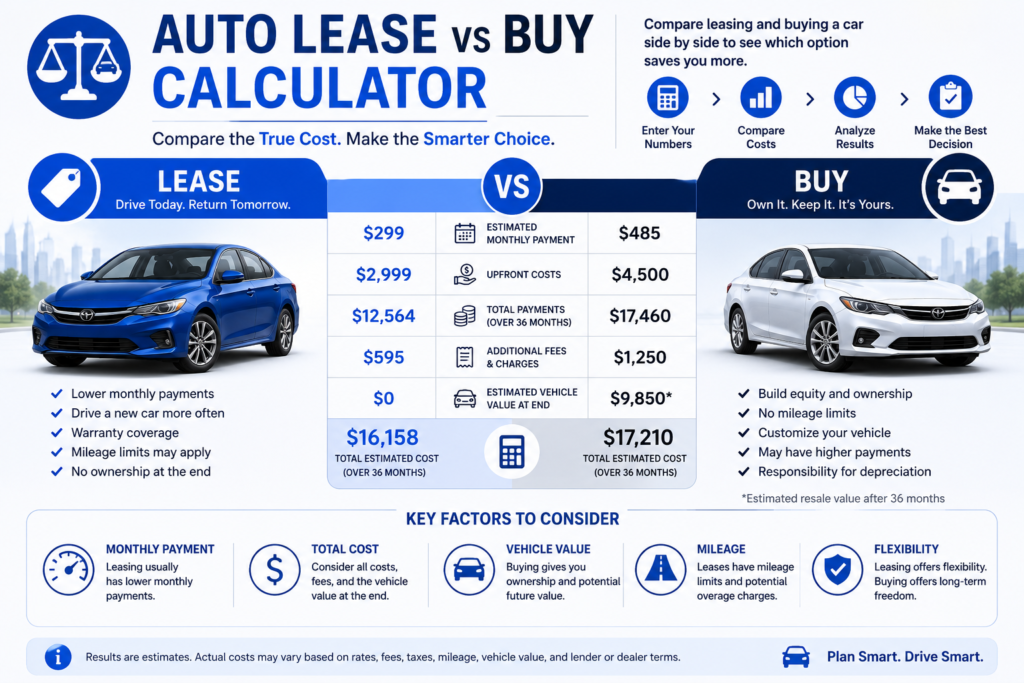
Auto Lease vs Buy Calculator
Compare the estimated cost of leasing a vehicle versus financing and buying it. See monthly costs, total out-of-pocket cost, estimated vehicle equity, and which option may cost less over your selected comparison period.
Lease vs Buy Details
Enter your financing and lease assumptions below.
Buy / Finance
Enter the estimated purchase and loan details.
Lease
Enter the main costs shown in the lease offer.
Comparison
Choose the period and estimated vehicle value to compare.
For the clearest comparison, use a comparison period that matches or is shorter than the lease term. Enter the lease amount due at signing excluding the first monthly payment so that payment is not counted twice. Buying estimates your remaining loan balance and vehicle equity.
Lease vs Buy Cost Comparison
Review the major estimated costs side by side.
| Comparison | Buy | Lease |
|---|---|---|
| Monthly Payment | $0.00 | $0.00 |
| Upfront Cost | $0.00 | $0.00 |
| Payments During Comparison Period | $0.00 | $0.00 |
| End-of-Period Value / Equity | $0.00 | $0.00 |
| Estimated Effective Cost | $0.00 | $0.00 |
How the Lease vs Buy Calculator Works
Buying builds ownership in the vehicle, so this calculator estimates the value of the car at the end of the comparison period and subtracts any remaining loan balance to estimate your equity.
Leasing generally does not create vehicle ownership, so the estimated lease cost is based on monthly lease payments, upfront costs entered separately from the first monthly payment, and applicable lease-end fees.
A lease may provide a lower monthly payment, while buying may offer better long-term value because you retain the vehicle or its resale value.
How to Use the Auto Lease vs Buy Calculator
Our Auto Lease vs Buy Calculator helps you compare the estimated financial cost of leasing a vehicle with the cost of buying one. Enter the relevant lease and purchase information to see how monthly payments, upfront costs, financing charges, and estimated vehicle value can affect the comparison.
The calculator is designed to provide a simplified side-by-side estimate. Because lease agreements and auto loans can contain different fees, taxes, mileage limits, and other conditions, always compare the calculator results with the actual terms offered by the dealer or lender.
What Is the Difference Between Leasing and Buying a Car?
When you buy a vehicle, you generally pay cash or finance the purchase with an auto loan. Once the loan is fully repaid, you own the vehicle. Its future resale or trade-in value can therefore be an important part of the overall financial picture.
With a lease, you generally make payments for the right to use the vehicle during a specified period. At the end of the lease, you normally return the vehicle unless the agreement provides an option to purchase it.
Monthly Payments
Lease payments can sometimes be lower than payments on a loan for the same vehicle because the payment structure is different. However, monthly payment alone does not determine which option costs less overall.
When comparing leasing and buying, consider the complete cost over the period you expect to keep or use the vehicle.
Upfront Costs
Both options can involve upfront expenses. A vehicle purchase may include a down payment, taxes, registration costs, and other fees. A lease may require an amount due at signing that can include several different charges depending on the agreement.
Vehicle Value and Ownership
One important difference is what you have at the end of the comparison period. A buyer may own a vehicle with remaining resale value, while a typical lessee returns the vehicle at the end of the lease unless a purchase option is exercised.
For this reason, estimated vehicle value can be important when comparing the long-term economic cost of buying versus leasing.
Mileage and Lease Conditions
Lease agreements commonly include mileage allowances and vehicle-condition requirements. Exceeding permitted mileage or returning a vehicle with certain types of damage or wear may result in additional charges under the lease agreement.
When Could Buying a Car Make Sense?
Buying may be worth considering if you expect to keep the vehicle for several years, want ownership after the loan is repaid, drive a high number of miles, or prefer not to have lease-related mileage and return conditions.
The total cost of buying depends on factors such as purchase price, down payment, APR, loan term, taxes, fees, maintenance, and the vehicle's future value.
When Could Leasing a Car Make Sense?
Leasing may be considered by drivers who prefer changing vehicles relatively frequently or who value a particular monthly payment structure. The actual attractiveness of a lease depends on its upfront costs, monthly payments, mileage allowance, lease duration, residual value, and other contractual terms.
Explore Other Car Finance Calculators
If you are considering purchasing and financing a vehicle, use our Car Loan Finance Calculator to estimate your monthly payment, total interest, taxes, and overall financing cost.
You can also use our Car Depreciation Calculator to estimate how a vehicle's value may change over time.
If you want to compare two different auto financing offers, try our Car Loan Comparison Calculator .
Important Lease vs Buy Considerations
A lease-versus-buy comparison can vary significantly depending on assumptions. Taxes, registration charges, financing fees, lease acquisition or disposition fees, mileage charges, maintenance costs, insurance, vehicle depreciation, and end-of-term options can all affect the actual cost.
For additional consumer information about vehicle financing and leasing, visit the Federal Trade Commission guide to financing or leasing a car .
This calculator provides estimates for informational and educational purposes only. It does not constitute financial, tax, legal, credit, or lending advice. Actual lease payments, financing costs, taxes, fees, vehicle values, and contractual terms can differ from the estimates shown.